Wilhelm Hoffmann A.G., Dresden
Early PPC Printers from Dresden
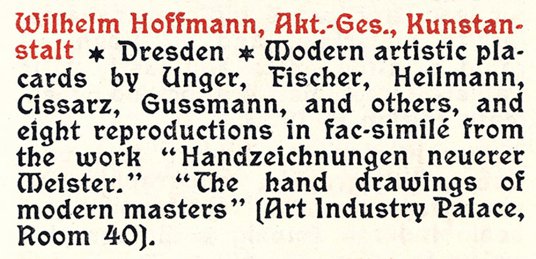
When collectors are asked if they knew any German postcard printing houses from the city of Dresden in business before the turn of the century, most will reply immendiately Stengel & Co. Some other may recall the older company of Roemmler & Jonas (establ. 1871).
But W. Hoffmann? The origins of the business go back to 1864 when Emil Wilhelm Hoffmann started working as (commercial) photographer. In the following years Hoffmann is listed with photo studios under several addresses together with changing business partners. Different business names, too. Between 1870-73 at Pragerstr. 6. Business partners (temporarily) were the photographers J. Weck and R. Roemler. Since 6 November 1876 the company name was Wilhelm Hoffmann. 1878 listed at Johannisplatz 18 together with C. Miersch/L.O. Lonke. 1879-1884 at Ziegelstr. 4, by 1880 found at house no. 7. Then came move to Marschallstr. 12-14.
Hoffmann Company History
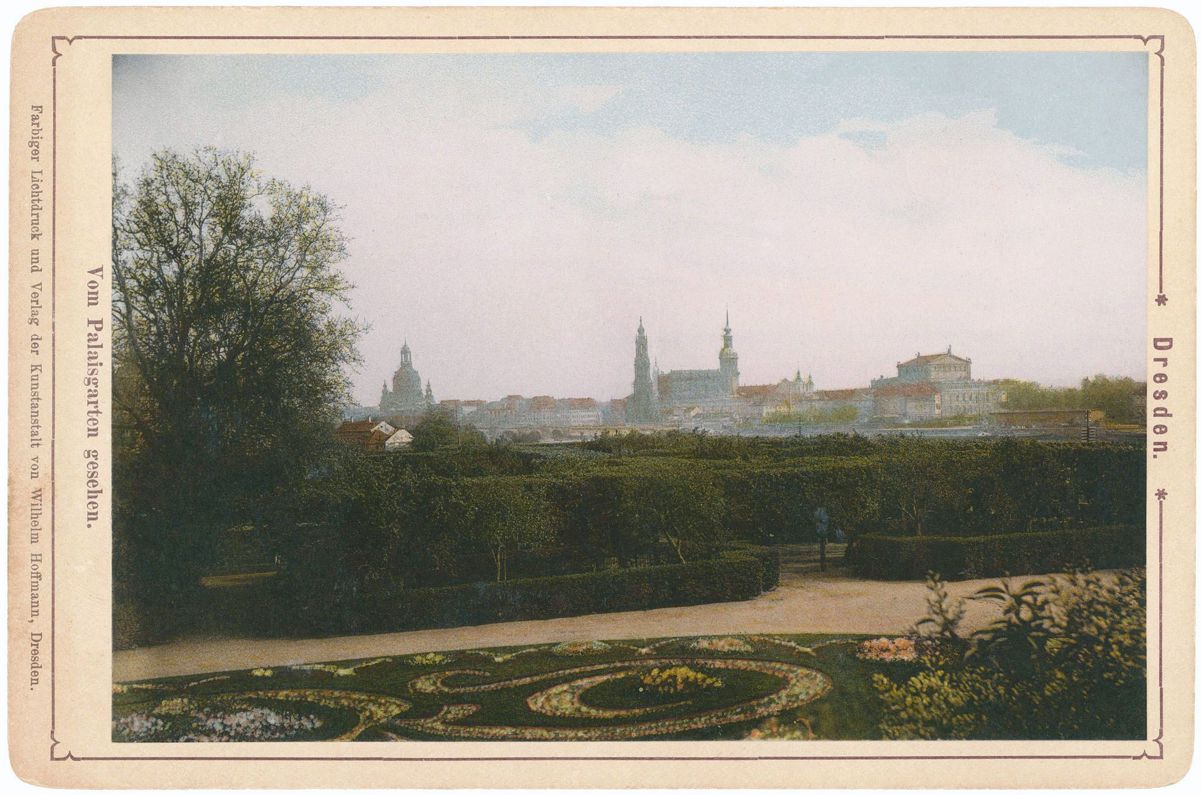
Since the 1880‘s the business was owned by businessman Georg Bruno Seele (owner of houses Marschallstr 12/14). Then on 10 May 1892 Bruno Schulze took over the business. By 1895 the company was still found at same address. Then moved into own (3-story) factory at Blasewitzerstr. 25 the next year. Neighbour of Roemmler & Jonas. Effective 1 January 1897 the business was converted into a joint-stock company under the name Wilhelm Hoffmann Kunstanstalt auf Aktien. Director was Bruno Schulze, company secretary Georg Schulze. Capital 500,000 Marks in shares. Late February 1900 the business was renamed into Kunstanstalt Wilhelm Hoffmann A.G.
Some workers stayed long with a particular company. For instance collotype master printer Theodor Markert celebrated 25 years working anniversary at Hoffmann on 7 November 1901. There were also other persons in Dresden with family name Markert involved in collotype printing/postcard business.
Wilhelm Hoffmann company used lithography/letterpress/collotype printing processes, offered photography, book binding and had an own colouring shop. Business must had been satisfactory for some years. Around 1904 W. Hoffmann employed some 100 persons, had a total of 20 flatbed presses and 25 other machines for production. Between 1897 to 1908 the company paid between 4-7% divident yearly to share holders. Then the company did run into financial difficulties which got worse year by year. Former owner and long time director Bruno Schulze no longer chairman of the board of directors by end of June 1911. Replaced by director J. A. Fohmann.
Finally on 13 January 1913 the W. Hoffmann joint-stock company was renamed into Dresdner Kunstdruckerei A.G. (at new address) BUT immediately liquidated again. So it was possible that the open commercial partnership Kunstanstalt Wilhelm Hoffmann Inh. Altmann & Fohmann could be continued at old address. Directed by shareholders Carl Heinrich Altmann and Josef Anton Fohmann. The company was specialised in art facsimile reproductions, poster and postcard printing in 1913. Had 7 letterpress, 9 collotype and 5 litho flatbed presses and employed some 80 workers.
New partners/owners and move
In August 1915 the open commercial partnership was dissolved and A. Fohmann left. The company name read now Kunstanstalt Wilhelm Hoffmann. A Prof. August Dossmann become new business partner of C.H. Altmann soon. In 1919 Carl. Heinrich Altmann was sole owner again. By 1921 a Prof. C. Hofmann is mentioned as company secretary. Company reorganised now. 6 letterpress/6 litho/2 collotype presses and a new offset press installed, 14 other machines and 80 workers. Coloured printing offered for various articles incl. postcards.
In 1924 a Hermann Otto Drubig became new owner and moved the Hoffmann company from formerly own factory (owned by C.H. Altmann) at Blasewitzer Str. 25 to Blasewitzer Str. 74 (1st floor). At this address the fancy paper factory Willbald Feller was found, also Albert Hottenroth, a company specialised in dye-cutting/embossing. Some time later Alfred F. Drubig joined as shareholder of the Wilh. Hoffmann business who concentrated solely on letterpress and litho printing. A Prof. Rudolf Worm joined the Drubig‘s by late 1920‘s. Company moved to Trinitatisstr. 30 in 1935, not far from former location. Plenty of cigarette factories in this area. In 1938 Trinitatisstr. was renamed into Fiedlerstr. The owners Hermann Otto Drubig and Prof. Rudolf Worm can be traced until 1942 at least. Wilhelm Hoffmann company appears to have continued working during most of WW2 years.
Wilh. Hoffmann Notes:
An article on a visit to the Hoffmann printing company is found in the Austrian printing trade publication "Freie Kuenste" no. 22, 1887. (Quote): The business found in a bigger 3-story factory building, the different working steps for collotype printing explained, daylight expose of printing formes, their well-equipped reproduction studios praised, manual colouring shop, the excellent art reproductions and Hoffmann‘s international reputation mentioned. Their collotype printing shop consisted of 5 flatbed presses including one of the biggest printing format. 4 older collotype handpresses also still in use. Daily production of 6000-7000 pictures.
These figures included prints in postcard but also bigger (art print) size. Quite big company in the field by late 1880‘s. Worked for their own but also other publishing businesses.
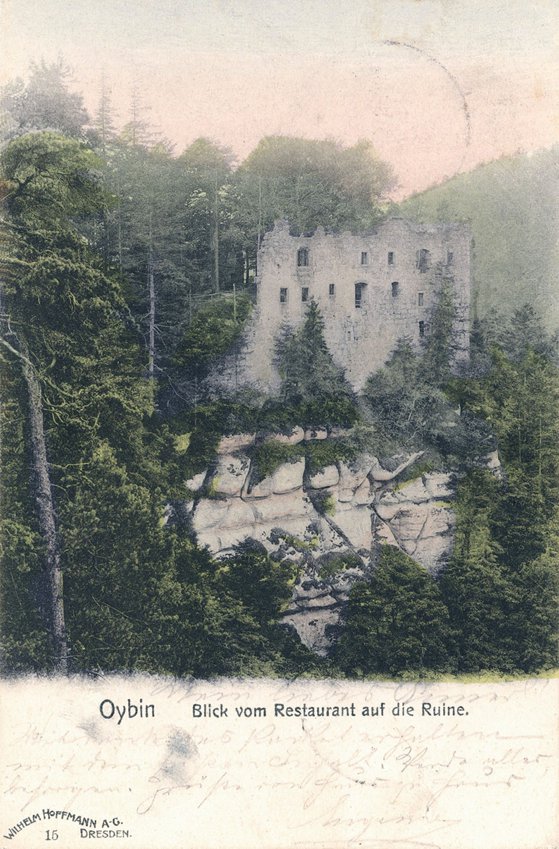
Although collotype process played a major role (mostly ppc‘s) at the Wilh. Hoffmann company, they were also praised for their (chromo)lithographic printings, especially (artist) posters and postcards at about the turn of the century. Hoffmann printed also typical coloured chromo postcards (even "Greetings from" design). Although the mass of postcards was done by collotype, mono- and duotone, combined with (litho) machine colouring or often hand-coloured. National and international customers.
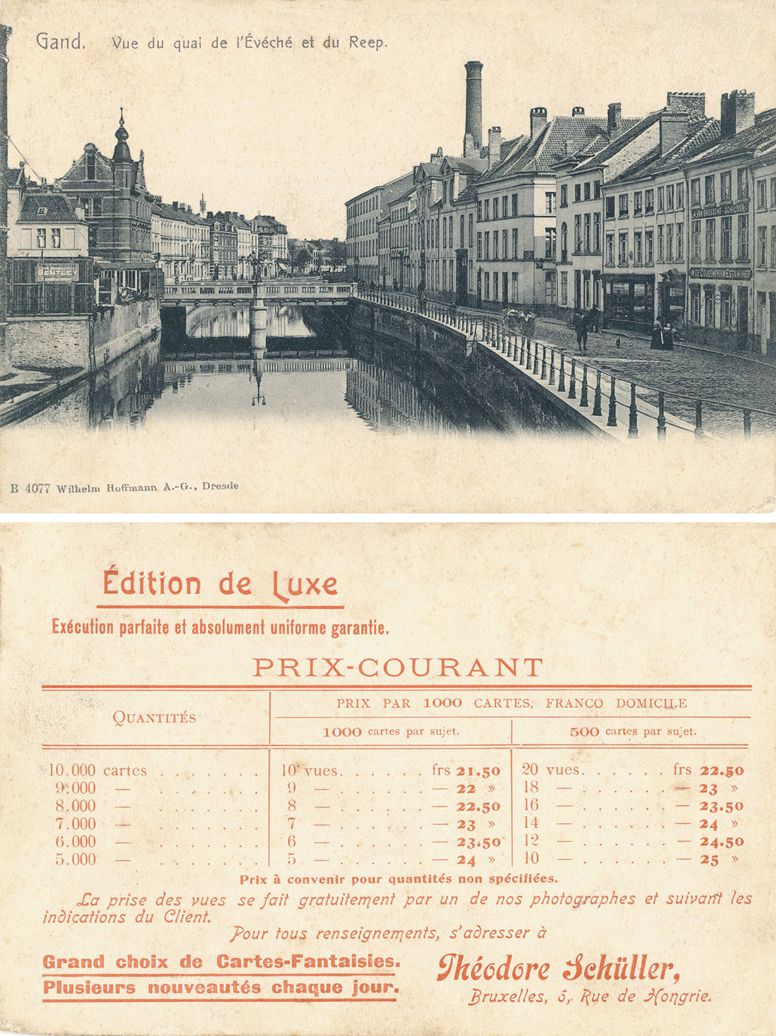
Hoffmann company had an own sole representative for Belgium for some years to my surprise.
Continued on next page inclusding some Hoffmann printed postcards.