Stange & Wagner, Berlin
Introduction
This was a typical German Export postcard printer (later also with publishing dept.) of pre-WW1 times, of some business size and known to have produced millions of cards. However, how to identify S&W cards proves to be difficult and serious information on the company is also hard to find. Postcard printer & publisher research needs a good portion of luck. A find by chance of US collector/researcher Jean Ritsema in the periodical "The Pharmaceutical Era", December 6, 1906 edition meant a major break through. Now we know of S&W‘s major US business connection.
Company History
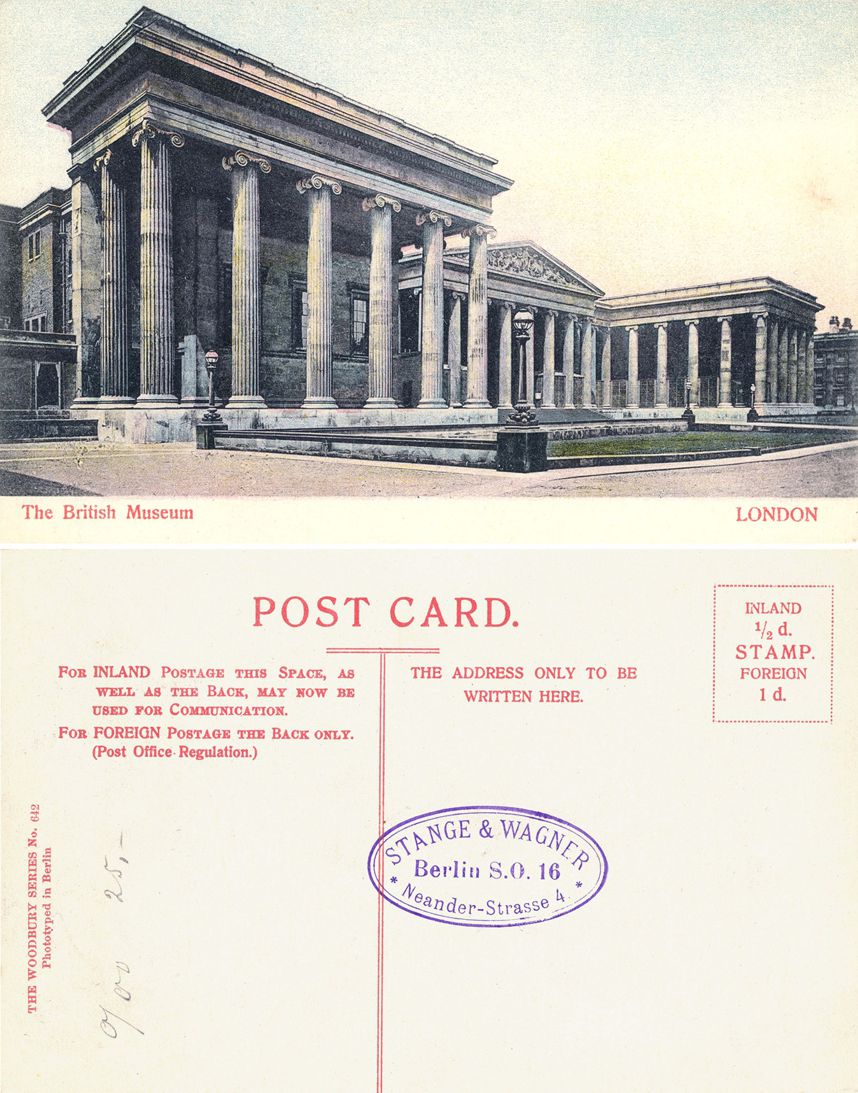
Stange & Wagner, collotype printers and phototechnical fine arts company was set up in June 1901 by August Ferdinand Stange together with Johann Ernst Carl Wagner. Business found at Neanderstr. 4, Berlin S.O. 16. Ferdinand Stange had a fancy paper/stationery/printing business background. Carl Wagner had been business partner (since May 1894) of the early around collotype printing business of W. Neumann & Co., Berlin. Then in 1898 Carl set up Deyhle & Wagner collotype printing company together with Hugo Deyhle. To become the biggest collotype printing company at Berlin for some years, with a daily production of up to 300,000 cards at best times. In first half of 1900 Wilfried Deyhle joined the partnership and the company name read Gebr. Deyhle & Wagner. Carl Wagner left the company soon, however.
Stange & Wagner‘s business must had done well. Early 1904 they added a letterpress and lithography shop. The company was found on 3 floors. In early 1904 they also set up a separate real photo printing company named Stange & Wagner Bromsilberdruck GmbH. See separate entry. However, this daughter company was liquidated on 19 February 1906 already again.
S & W and the ANC Connection
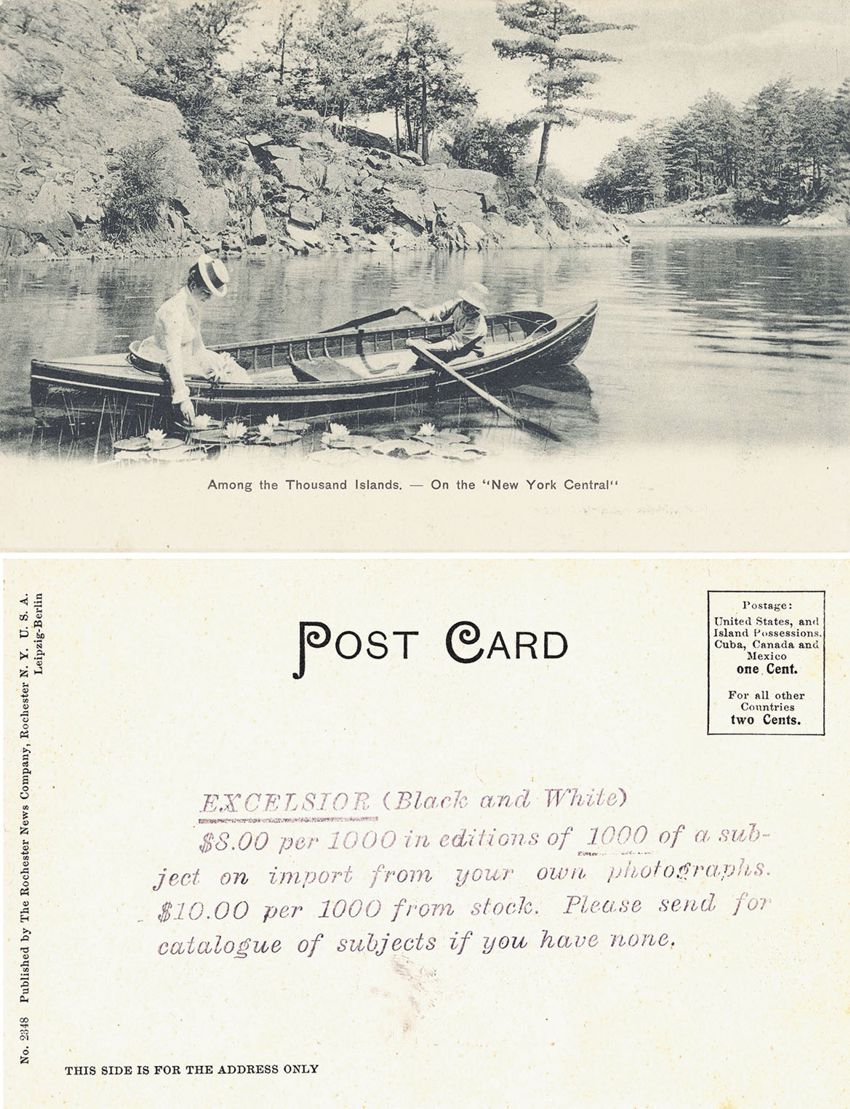
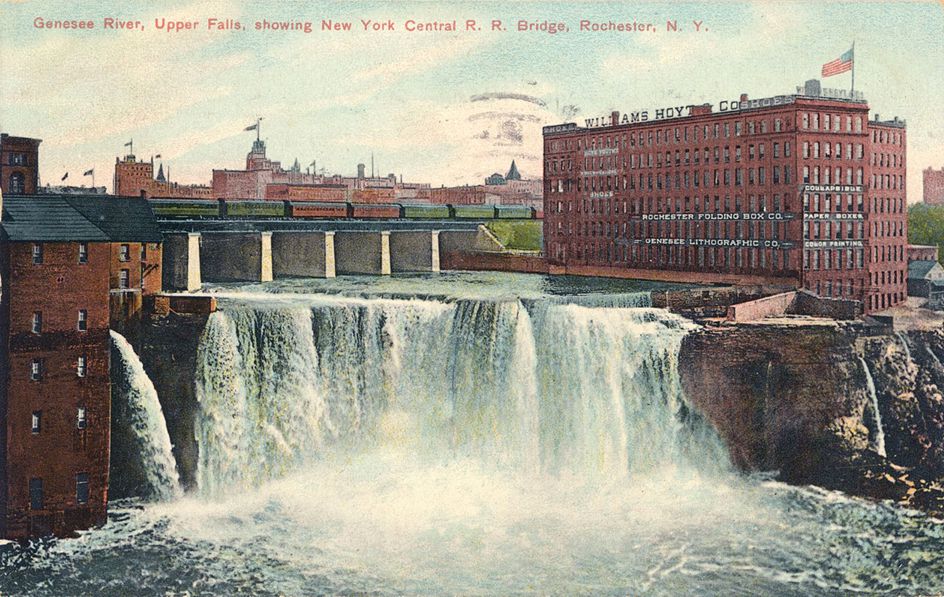
Thanks to the above mentioned find we know now that S&W were a major supplier of collotype printed (monochrome/coloured) postcards of the huge American News Company (ANC). This big customer ordered millions of cards from German printers. Involved were C.G. Roeder and E. Pinkau & Co. AG from Leipzig, Nenke & Ostermaier and also Stengel & Co., both from Dresden. Probably more firms. S&W printed ANC cards easy to identify by their typical Post Card imprint: "Long leg P and curly C". For more S&W/ANC information see articles in TPA 32.
Several British publishers placed also orders with S&W. Likely they printed also some of the collotype cards published by Osnabruecker Papierwaren-Fabrik (OPF). Still much to discover. Although they had a company logo, which is only found on the real photo cards of the short-lived daughter company so far, identification of S&W printed cards is often difficult. Some German issues, mostly views from Berlin and other German places, do show their name imprinted.
S&W used an own patented collotype printing process, claiming to provide constant good quality also with higher quantities. Furthermore they offered any other collotype makes and qualities, mono- and duotone, coloured (combined) process including something they called "Autobunt" which was probably an Autochrome (combined letterpress/litho) process variation. Post cards were available with glossy finish, too.
The End of the big S&W Company
The Klimsch 1907 printing trade directory lists 4 letterpress, 4 litho and 12 collotype presses plus other machinery. Employed were 180 workers. A S&W advert published early 1907 mentions a total of 22 flatbed printing presses for production, most of biggest printing format.
The increasing number of protective tariffs introduced by various countries surely hit the (export) printer S&W badly. A Max Hesse joined as new business partner in late 1909. But market situation had changed. Finally Stange & Wagner company declared insolvency on 29 May 1912.
The complete (production) facilities of Stange & Wagner, said to be still in full operation, were offered for sale by official receiver Klein on 5 June 1912.
Both, Mr. Stange and Mr. Wagner, continued to be involved separately in (postcard) printing business afterwards. Research continues.