Postcard Company Research
Types of Postcard Collectors/Deltiologists
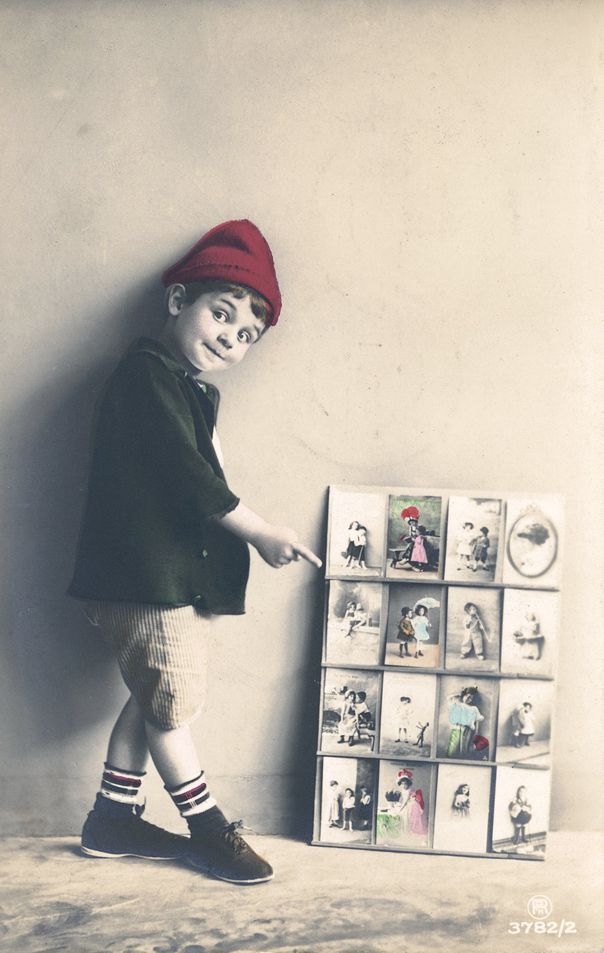
Personally I prefer the more general description collector of Picture Postcard Cards (PPC) although others like to use the term "Deltiologist". The latter may sound a little bit more seriously to some people. although many others might not heard of it before.
Almost a lifetime ago, James L. Lowe, editor of "Deltiology - A Journal for Postcard Collectors and Dealers" (USA) published an article titled "Types of Deltiologists" in his publication (Vol. 8, No. 9) dated November 1967. He classified ppc collectors into six major groups. Each with an interesting description and although this is really old, from pre-internet times, it still contains some timeless truth in my opintion.
Class 1 was "The Dilettante Collector". Class 2 "The Researcher". Class 3 "The Topical Buff". Class 4 "The Traveloguer". Class 5 read "The Dreamer" and class 6 "The Accumulator".
Let‘s take a closer look at class 2:
"The Researcher". He is one who specializes in gathering information about the history of deltiology including background material about artists, publishers, trademarks, trade names, printing processes, and check lists of postcards issued. The researcher often delves into the historical, sociological, and pychological implications of the postcard phenomenon. He often prefers to file his cards by publishers and according to numbers in order to get an overall view of a particular publisher‘s work.
Okay, most of what Mr. Lowe mentions here is still valid. Although the ways finding information especially on a forgotten company and trade in general have changed a great deal meanwhile.
Research Sources
The first and major source for any information is the worldwide web. Ever growing source of valuable, sometimes surprising information. Much with commercial background as well as incorrect or even fake information and rubbish. The content not really meant to be available for longer time. I am sure you have come across "Error 404. Page not found" notices more than once.
When looking for any additional postcard related information you might be lucky to find at least some data of interest. Surely an offer to purchase further articles similar to yours. When searching for a common name it could become complicated and the search requires patience and time. But, sometimes there is nothing at all. Simply because the old postcard trade has left not many traces except old cards. Much is lost for all times as the entire matter was long of little to no interest to archives, museums and others preserving information.
Meanwhile more old printed sources are digitalized and made available to the public. But not all once printed periodicals/books are available. Some might be hidden in private collections and others are spread all over the world or have simply disappeared.
City address books as well as printing and paper trade address books are a great source of information. The latter category not often found in digital form, however. Old trade periodicals, newspaper archives, exhibition catalogues, older postcard collector publications are other good sources of background information. Even better are old (illustrated) letterheads and bills of a particular company. For a clear identification of a long gone printer or who had hidden behind a particular logo or initials, a (printing) sample card is perfect. Best when the name was added/imprinted on a regular postcard allowing to see the address side layout.
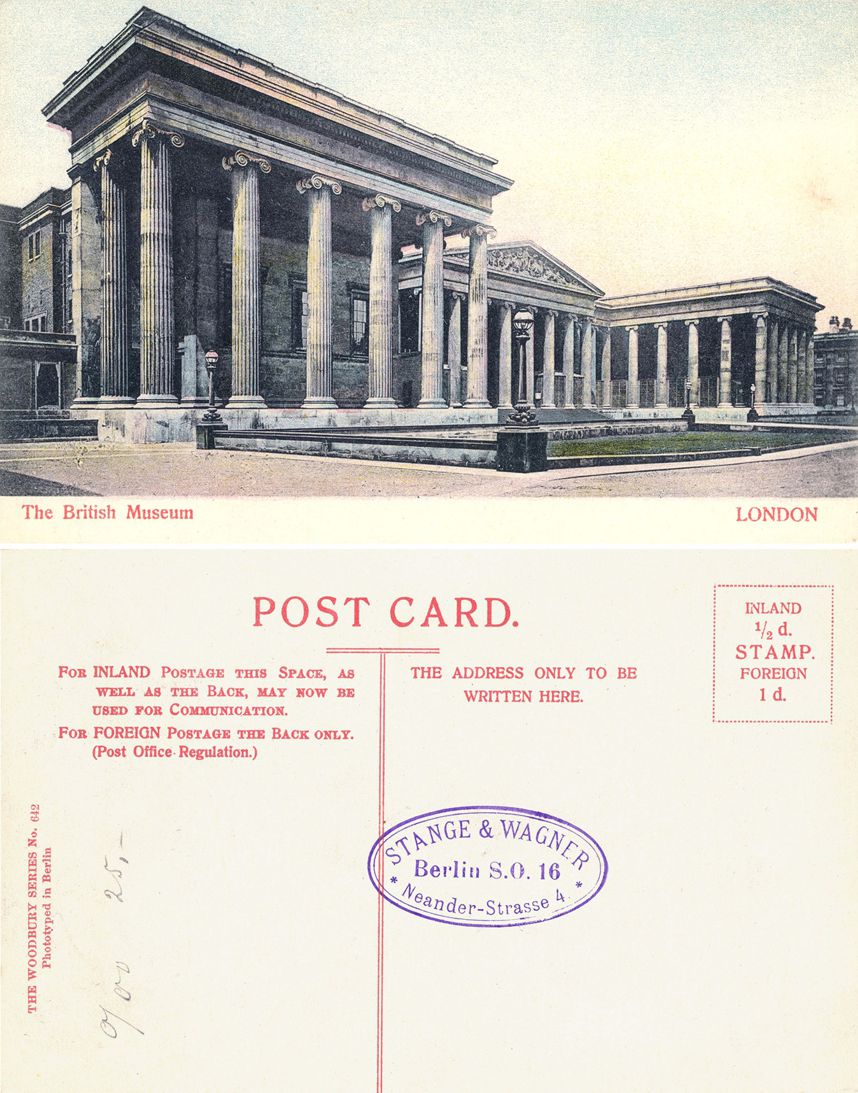
Illustrated are both sides of a view of the British Museum, London. A collotype printed view, with some machine colouring. Publisher line reads The Woodbury series No. 642. "Photoytyped in Berlin". Now there could had been a number of Berlin printers the possible source of this card. The big city was a center of ppc printers then. But the rubberstamp imprint identifies the printer as "Stange & Wagner", Neanderstr. 4, Berlin S.O. 16. A bigger company specialised on ppc printing. S&W were also a major German printer for American News Company (ANC). The ANC company history was published in TPA issue 32.
However, sample cards like this are not always easy to find. Sometimes costly, too.
Standard Research Procedures
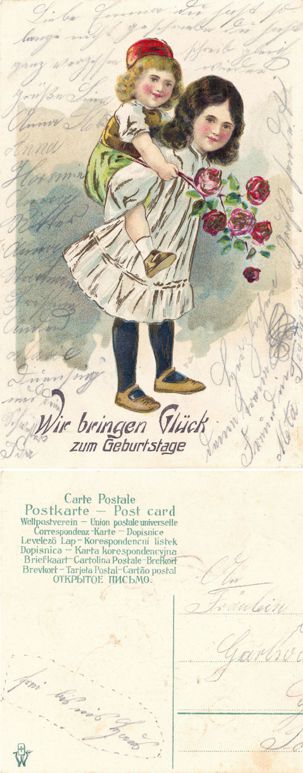
To have a matching printing sample card at hand is not often the case. More likely an exception. But in case you wish to find out more on a particular card, the publisher and who printed it long ago, or the artist in charge, how many cards were found in the complete series and so on. What can you do?
Try to collect other cards of the same series or showing the same logo or any other identification marks as possible. Sometimes you are lucky and find another card revealing additional information. Now I know most try to find other similar cards in the huge masses of cards offered by internet dealers. Unless you are looking for a popular somehow name which has an own section you can spend plenty of time searching. Good luck! Another disadvantage is the lower resolution of illustrations. In case you hunt a particular logo the original reproduction quality might had been not always good. The scanned online image does show even less details. Original cards and a magnifying glass often the better choice.
Let‘s say we want to find out the name of a company who had used a particular logo on old postcards. Some web sites do list logos to compare although most concentrate of publishers‘ initials. Scanning and blowing up various small size logo‘s from postcards is no fun at all and takes long.
Most information presented appears to be collected from other web sources. If all the information is truly correct cannot be said. But it is worth a try of course.
The logo in question might had been used in advertising of the publisher. That would mean a definite identification. But relatively few old postcard trade periodicals with advertising pages are found online to my actual knowledge. A difficult situation which is not really new. The hard to find old German publication "Die Postkarte" had a regular column where people asked who stood behind particular logos or initials found on postcards still relatively new.
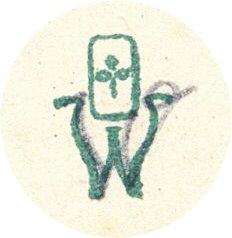
I illustrate an embossed Easter Greeting card printed by chromolitho process showing an unknown to me "Capital W" logo. The postmark partly illegible but taking the address side layout into account, with the dividing line not found in center position but moved to the left a bit, it origins from c. 1906.
This was likely a German (or Austrian) production. Not only because of the caption in German, as the same design might had been available with captions in other languages, too. Many publishers and printers were big in export.
I do have many old postcards, but this is my only sample so far showing the particular logo. The UPU (Union Postale Universelle) block design probably a good hint to find more cards. That might help to identify the printer which has not to be also the publisher automatically, however.
In case you have an idea, please let me know. Thank you.
Finally...
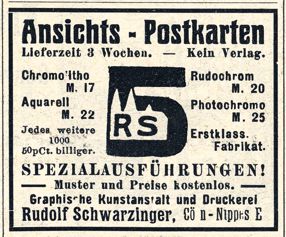
Further lengthy explainations make little sense in my opinion. The identification marks topic is too varied and differs from country to country. Any logos are fine, but major German companies did not use them. But numbers and other codes instead. Take a look at the download articles section and see E. Pinkau & Co. AG, C.G. Roeder or Glass & Tuscher for example.
Some printers/publishers proudly illustrated an own logo or trademark in advertising, but you rarely find it again on any cards. Printer Rudolf Schwarzinger from Cologne-Nippes one of a number of similar cases.
An identification is an important but a first step only. On next page I show a selection of identified company logos. More are found in the real photo card section.
I give priority to presenting actual research results on long-gone companies. Each accompanied by card illustrations of course. See for yourself.
– BACK TO TOP –