Glass & Tuscher, Leipzig
The first decade
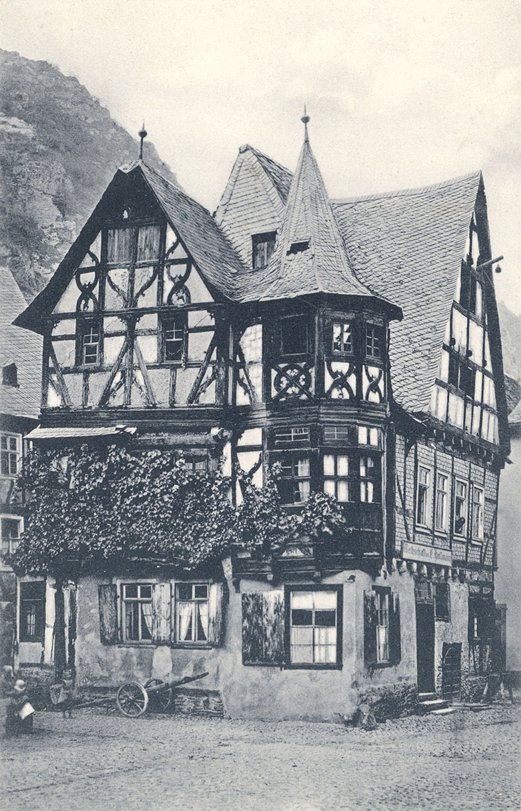
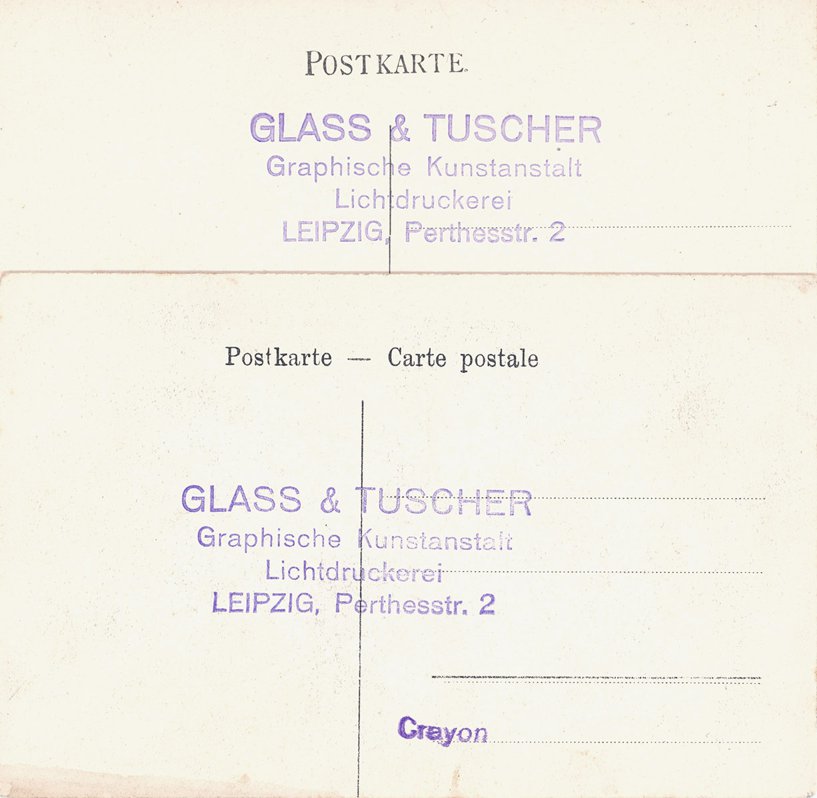
Glass & Tuscher, Leipzig, Saxony, was set up by Reinhard Johannes Glass and Leo August Tuscher in September 1906. Compared with most of the other postcard printers around at Leipzig then, G&T was a smaller sized business. But very specialized in picture postcard printing / export. Found at Perthestr. 2 in rented rooms with 2 collotype presses as well as some other production facilities and 12 workers by mid 1907. By 1910 the business had been moved to Bayersche Str. 77. Now G&T had a total of 7 presses (collotype / litho / letterpress) running and employed about 40 workers. In 1911 G&T set up an own publishing business. The company stayed here until 1927 when they finally moved into the new erected 5-story building of Wilhelm Diebener GmbH at Breite Str. 7.
G&T declared bankruptcy in March 1914. Leo Tuscher left the company. Glass & Tuscher GmbH (limited company) was set up in April 1914 as follow-up business. Business capital 46,000 Marks. Managing directors were Reinhard Johannes Glass and Gustav Theodor Schmidt. R. Glass was managing director until November 1915 and parted, too. Prof. Arthur Toepfer became managing director of G&T. A. Toepfer occupied the position until 1939 at least.
New Owner of Glass & Tuscher GmbH
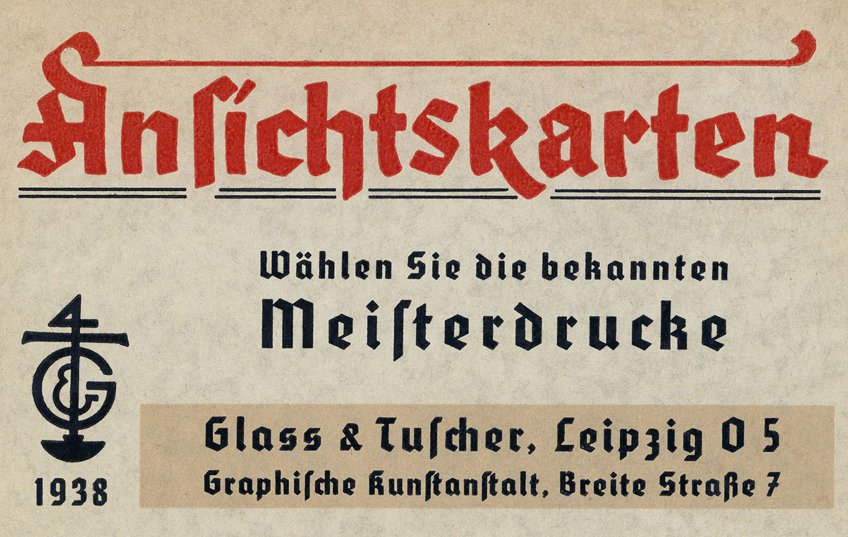
The local publishing company Wilhelm Diebener, in business since 1889, finally took over G&T in 1929. Dr. Carl Ruehle (son-in-law to W. Diebener; 1890-1953) was the major shareholder together with several silent business partners. G&T continued printing postcards, but typesetting and letterpress facilities grew considerably to handle the Diebener orders.
The building Breite Str. 7 survived WW2 destructions. Former Diebener and Glass & Tuscher GmbH owners moved to West-Germany in c. 1949. The final business entry in Polygraph printing trade directory 1950 edition reveals that a Hermann Hamkens had taken over former G&T business. The company name read now Hermann Hamkens formerly Glass & Tuscher. No information at hand how long this business was in existence.
Secret of initial success?
The business was set up at a time when market conditions for (collotype printed) postcards were not too well anymore. Too much competition left only meagre profit margins. But G&T appears to have had a good in-house "workflow", producing good quality at reasonable prices. Likely they used medium-sized printing formats, for instance 32 to 40 cards per sheet. Probably even the smaller 24 cards per sheet format to be more flexible and faster order handling.
They consequently issued new qualities and designs over and over again. Well documented by the unusual high number of printing sample cards found (I have more than 50 cards incl. duplicates). Some G&T names were: Graphit (also hand-coloured), Crayon, Gravure coloured, Chromo Collotype, Fotobrom (glossy and matte), Sepia (also hand-coloured), Opal (also glossy) in 3 assorted colours, Regina with/without frame border, Chromo-Iris, Bromophot, "Spiegelglanz" black (high glossy finish), Azur (ultra glossy) Lipsia, Gravure Imitation (3 assorted colours) etc. With or without margin, embossed, deckle-edged.
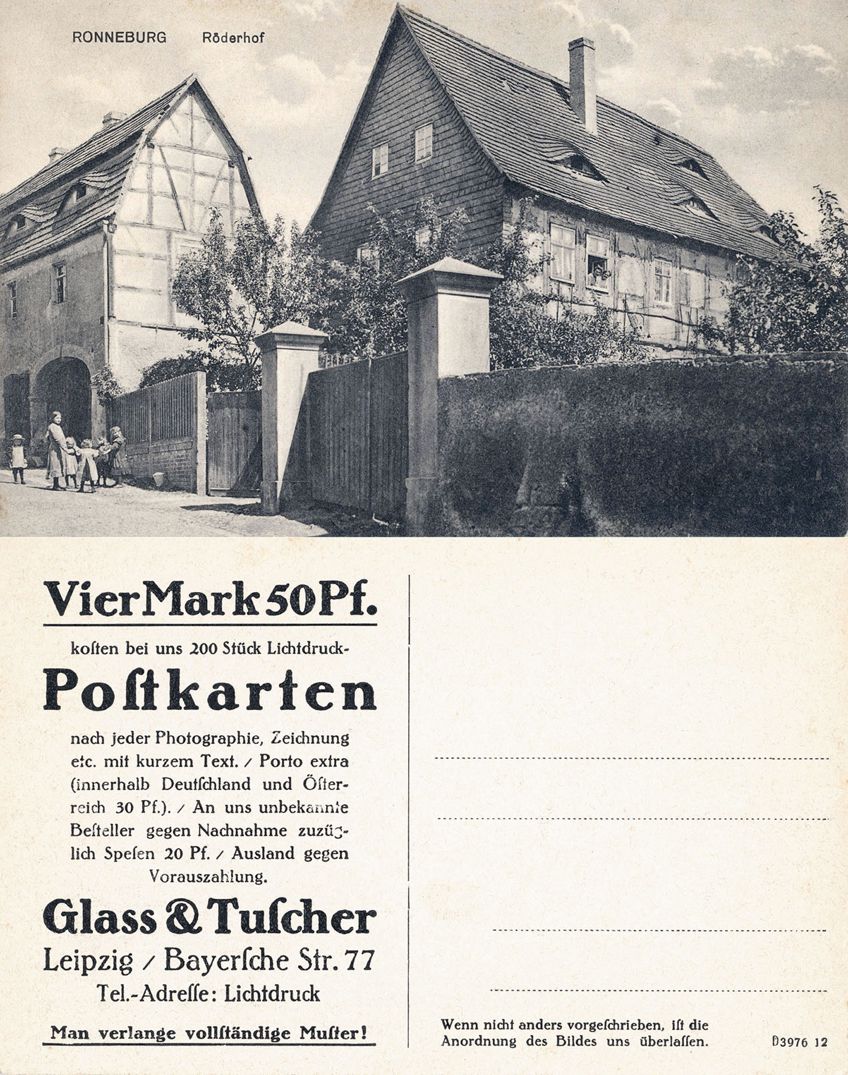
Besides standard / high-quality (coloured) cards for national customers, as well as from Europe and overseas, G&T began to offer small runs of cards during the years prior to WW1. 200 cards, b/w (Graphit style) for 4 Marks 50 Pfennig plus 30 Pfennig postage. Somehow they must had made some money even by this way.
An article on G&T was published years ago in "The Postcard Album" issue 21. The four-pager can be downloaded as pdf-file.
TPA 21_Glass_and_Tuscher_Leipzig [1.486 KB]
Glass & Tuscher Card Codes
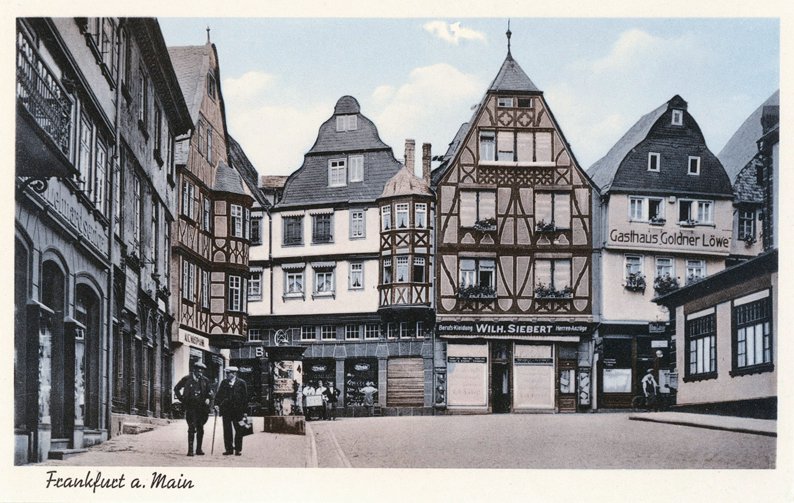
Like many other postcard printers, G&T coded each card with an individual job number. In 1907 they used plain numbers (up to 4-digit) found at the lower right corner on the address side. Something other printers did, too. Identification of these early G&T printed cards requires clearly identified samples to compare.
Between 1908-09 G&T started using a modified number code, 2 numbers standing for the year, then space, followed by a 3- to 4-digit card number. For example 08 8758. Now this type of coding was used already by the local, big company of Dr. Trenkler & Co. since 1907. This had probably led to some irritation.
From 1910 on G&T added a capital letter prefix to the card number, the year date was found now at the end. I use to call this the Alphabet Code. Example: A 3150 10. The numbering always running to 9999 (except a few likely -fictive?- 5-digit numbers found on promo cards from the 1930‘s). Then the following alphabetical letter was used. During times when business boomed, two different letters for the same year are not uncommon. Trusting that reprints received a new, actual then, code.
The lowest actually known G&T Alphabet Code reads "A 475 (19)10" and the highest/latest "R 4738 (19)43". More on this topic on next page.
Glass & Tuscher company from Leipzig, Saxony, printed picture postcards all the time for a period of some 36 years. Impressive indeed.
G&T continued on next page including a selection of cards.