Graphische Gesellschaft, Berlin
Dr. E. Mertens & Co.
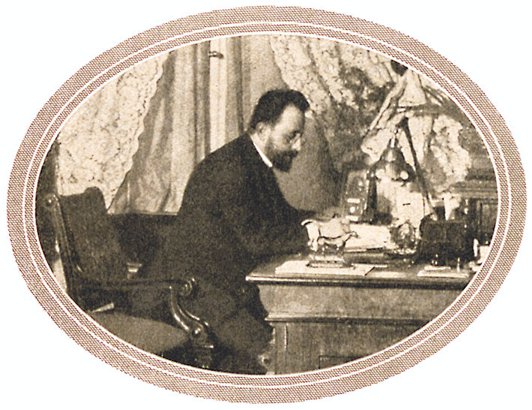
Early and bigger German (contract) postcard printer. The origins go back to 1890 when Dr. Eduard Mertens (1860-1919) set up Dr. E. Mertens & Co., a (limited partnership) business specialised in collotype printing and photographic reproduction. Also fine arts publisher. By 1895 found at Schaperstr. 4-5, Berlin-W.
Dr. Mertens was a creative reproduction specialist and inventor. Held various patents for improved (colour) collotype processes, colour photography etc. Later he gained much reputation for construction of the first high-speed rotation gravure press printing photos and text at the same time.
Graphische Gesellschaft E.G.m.b.H.
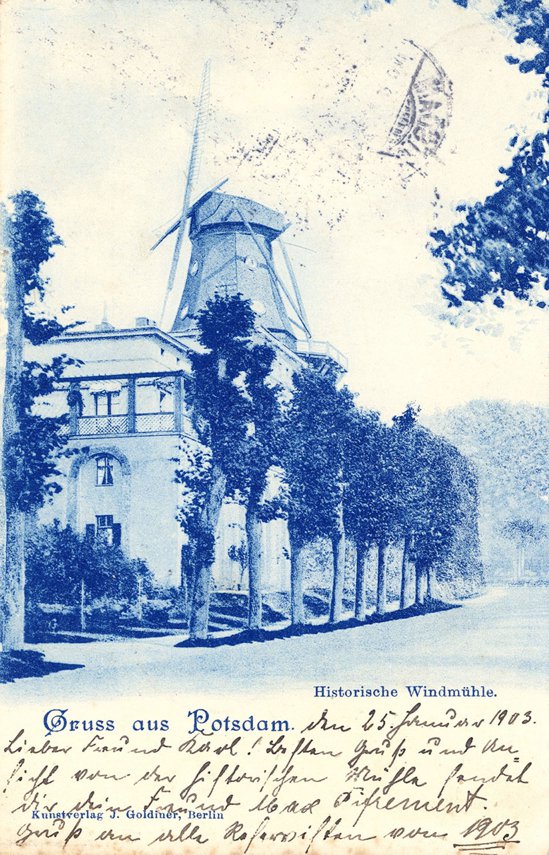
Above company together with another that Mertens did run for electro-mechanical gravure were taken over by a newly formed registered cooperative with limited liability named Graphische Gesellschaft E.G.m.b.H. in March 1897. Directed by Dr. E. Mertens together with (retired) city councillor Hermann Wallach (who died late 1904). The same year the new company moved to Lindenstr. 16/17. Before the GG business had been found spread over six different locations in Berlin. The new home included an own laboratory/workshop for Dr. Mertens.
Lindenstr. 16/17 was a typical for Berlin trade complex housing various trades including other printing companies and a couple of flats. Owner of the building was F. Luedecke, owner of a paper wholesaling business set up in 1873. By mid 1920‘s a joint stock company (A.G.) with branches in Bremen, Danzig and Breslau.
On 15 September 1902 Graphische Gesellschaft E.G.m.b.H. was converted into Graphische Gesellschaft A.G. (joint-stock company) with a share capital of 400,000 Marks. The members of the board were: H. Wallach, Dr. E. Mertens, Albert Hauff (bookdealer). The entire shares were held by founding members: paper merchant/wholesaler Ferd. Flinsch company, Berlin; businessman Oscar Lange, Berlin-Schöneberg; businessman Siegfried Jonas, Berlin; book dealer Bruno Hessling, Berlin-Halensee; paper wholesaler Fritz Lüdecke, Berlin; printing company owner Franz Müller, Berlin.
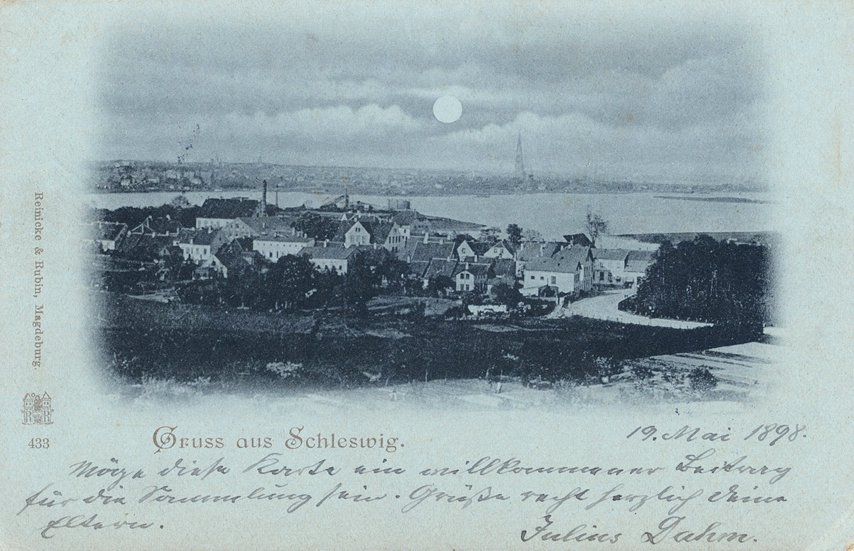
The first GG A.G. supervisory members were: consul general Bruno Wunderlich, Castle Eckberg/Dresden; royal senior civil servant Hans Rebling, Berlin; businessman Carl Laue, Dt. Wilmersdorf; architect Hans Osswald, Munich. "Big" names from various places indeed.
Now various printing processes were used. Lithography, collotype, letterpress, heliogravure. Plus block making and wood engraving, book binding and own (manual) colouring shop.
On 7 October 1905 the trademark "Graphoton" was registered for Graph. Gesellschaft A.G. Although picture postcards were the major product of GG, they offered to print almost anything else.
Not a success story
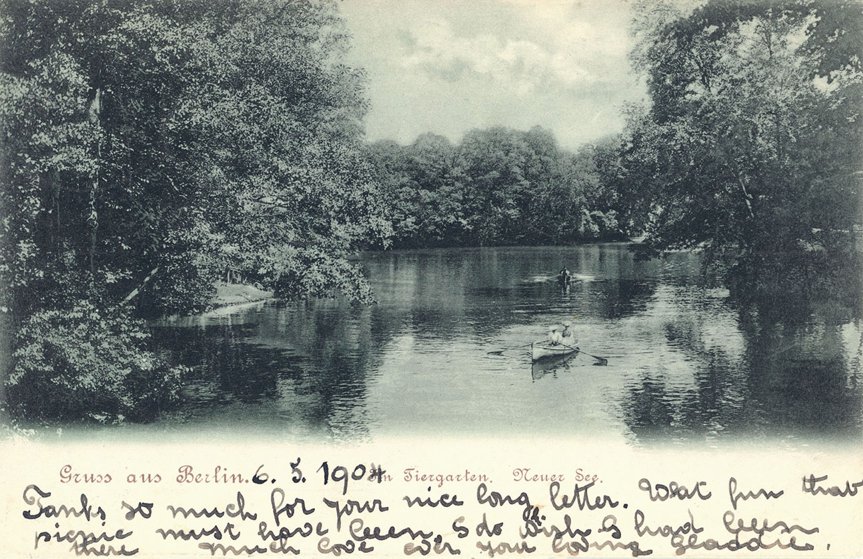
The joint-stock company paid 2% dividend in 1904. Nothing at all in the years to come. In general business wasn‘t running well. So, the production means were reduced to collotype/letterpress printing and block making in 1907. GG had 2 letterpress and 14 collotype presses for production in 1907-1908.
Since 1908 the company was led by former company secretary Klara Kohn. Dr. Mertens had left his directors chair and concentrated on rotary gravure process development. The share capital was reduced to 200,000 Marks to compensate losses in May 1908. In May 1910 another reduction was necessary, from 200,000 Marks to 50,000 Marks share capital. Additional debts of 170,470 Marks debts were compensated by selling licenses in late 1910. GG A.G. was no business success story indeed.
New owner in Inflation times
But GG A.G. managed to stay in business, also during war years. Director Miss Klara Kohn, who started working as book-keeper for Dr. Mertens & Co. back in 1895, celebrated their 25th anniversary in the company on 1 August 1920.
Early August 1923 (inflation times) GG A.G. was taken over by Vereinigte Kunstinstitute AG formerly Otto Troitzsch, Berlin-Schoeneberg. Then together with Paul Uffel & Co, Leipzig, the Troitzsch-Uffel AG, Berlin, was founded. GG had a share capital of 12,2 million Marks then and was led by Messrs Hentschel and Blecher. GG production remained at old address first, but offices/administration was found now at Feurigstr. 59, Berlin-Schoeneberg. Other firms said to had been taken over by former Troitzsch company, were printers Gebr. Feyl and Helios A.G., both from Berlin. 1923 must had been a strange year somehow.
The end of Graphische Gesellschaft A.G.
According Klimsch directories 1925-1928 GG was still found at old address and head director was a W. Hentschel. Suddenly the company had letterpress/litho/collotype/copper gravure and offset printing processes again. Specialised in postcards, catalogues and illustrated tables. No other information provided.
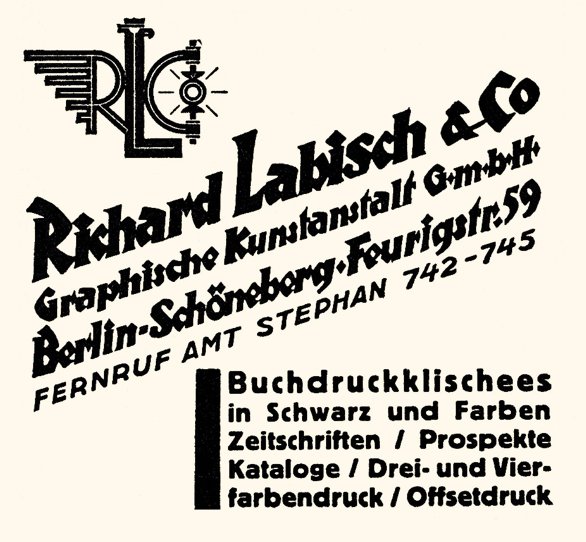
However, the Berlin address book 1927 lists GG already at Feurigstr. 59, Berlin-Schoeneberg. But in the 1928 Klimsch edition no Vereinigte Kunstinstitute AG formerly Otto Troitzsch as well as GG found at Feurigstr. 59 anymore, but Richard Labisch & Co. instead. Established in 1898 and a bigger printing/block making company. Owners of houses Feurigstr. 59 and 60. The full company name read Richard Labisch Graphische Kunstanstalt GmbH. Since 23 August 1937 with "Nachf.(olger)" = 'successor' added to name.
The Labisch company history ended in 1940.
Finally...
Graphische Gesellschaft was definitely a bigger postcard contract printer. At least up to c. 1908. Must had been involved in ppc export, too. They had an own export agent at Hamburg. Known are GG printed views from Italy and Austro-Hungarian Empire places. These show company name, but the majority of GG printed cards does not. The address side layout as well as some specific fonts used for captions often helpful for identification. Although the GG card output is not always of uniform design and layout. Something for specialists.
More information and some GG printed cards/layouts on next page.