Postman

THE POSTCARD ALBUM

POSTCARD PRINTER & PUBLISHER RESEARCH


 Postcard made of....

Postcards were printed on various qualities of card (board). Some with smooth surface, others rough, some stock heavier, photo paper etc. Then people began to experiment. Postcards on picture or both sides received a (printed) wood imitation look, or cotton, silk etc.

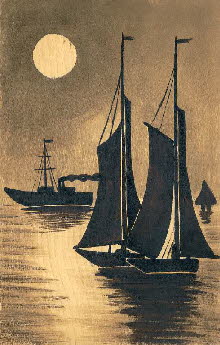
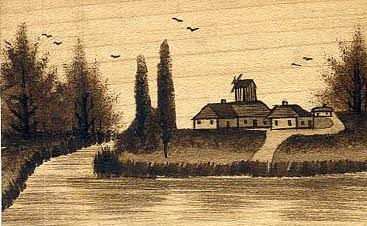
But why only printed imitation or thin coated some creative person thought? Suddenly postcards were “printed” on leather (guess mainly in the USA), on thin, lightweight wood, or even quite solid, on card made by peat and so on. Some creations were not long around, or mailing without envelope was prohibited by postal authorities. A problem was also to get the image on the material. Most designs are quite simple done because of technical limitations, sometimes hand painted.

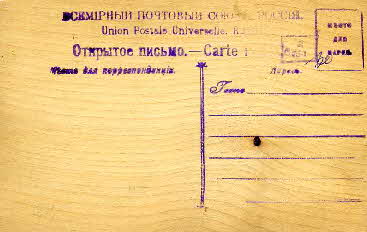
This view with ships on the sea from Russia was printed on lightweight wood, very thin but quite flexible. The picture was somehow printed in deep black ink. The address side however, was imprinted by hand by using a rubber stamp. This is the only sample I have seen for many, many years. Any more around?

Light_wood_postcard_address_side

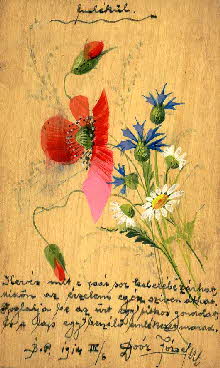
From Hungary comes this heavier wooden postcard with carefully hand painted flowers. The card is about 2 mm thick and weighs 13 g. Original size: 90 x 150 mm. The message is dated 1914. The word ‘Postcard’ in Hungarian language is found on the other side as well as an address, but no stamp; was mailed inside envelope. This was surely a more individual, small number series.


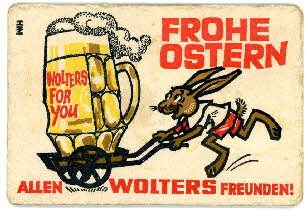
Unusual material for postcards was nothing in old times only. The beer brewery Wolters from Braunschweig issued this Easter greeting card (signed HIM) in the 1960’s.

The card has a typical ppc address side layout. To be mailed under letter rate postage. The card is more than 2 mm thick and made of beer mat material. What else?

Wolters_Easter_Greetings
Postcard_finds_curio
Lightweight_wood_postcard
Hungarian_wood_postcard

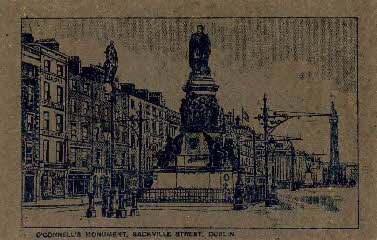
There might be many more interesting cards done of different material around. But I fear most were produced in small number only. Finally an example that shows clearly the problem of practical use. Irish firms tried to use peat paper/card for postcard production. Not only making card from peat is complicated. The shown sample demonstrates that the image, although monochrome only, does not come out well, but as the address side is of same look and colour not suitable for writing. Simply too dark. Other series are better, with the (coloured) image being printed separately and then put on.

O’Connels Monument, Sackville Street, Dublin.

Published by: The Irish Paper Agency, Dublin. Not. p/u

Thanks go to Dave Bailey for sharing this card with me.

Dublin_peat_postcard
[Home] [Postcard History] [Identification] [Printer Logo's] [TPA Magazine] [Contact] [PPC Novelties] [Why cardboard?] [Finds & Curio] [Collecting Subjets]